

queen anne’s lace look alikes is a delicate wildflower often seen along roadsides, meadows, and open fields. Scientifically known as Daucus carota, it is also called wild carrot and is generally harmless. However, it closely resembles several other plants, some of which are highly toxic. Because of this, proper identification is extremely important for anyone interested in foraging or exploring wild plants.
What Is Queen Anne’s Lace?
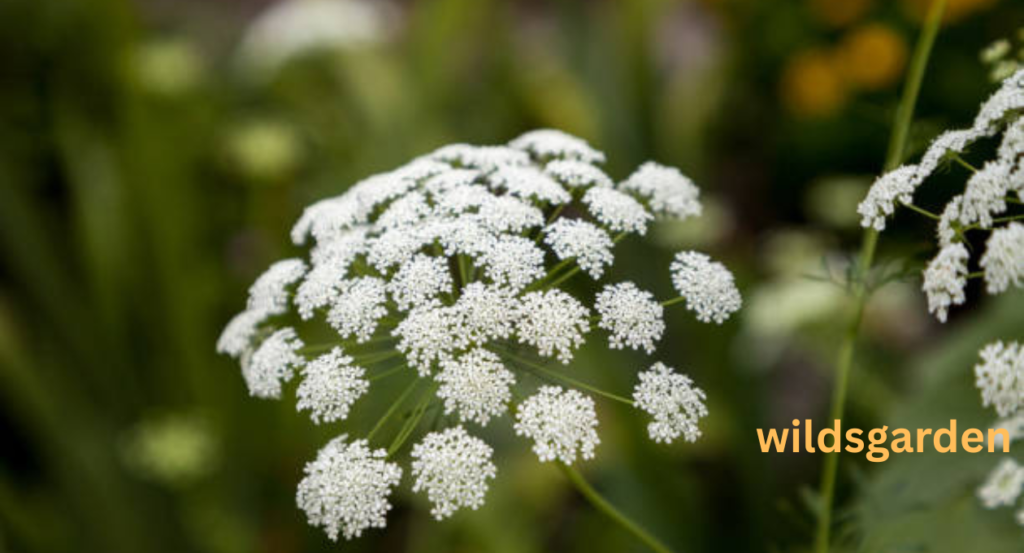
Queen Anne’s lace is recognized for its flat, umbrella-shaped clusters of tiny white flowers, known as umbels. A small dark purple or reddish floret is often found in the center, which serves as a helpful identifying feature. The stems are green and covered with fine hairs, and the leaves are feathery and resemble those of a carrot.
Another useful clue is its scent. When crushed, the plant gives off a mild carrot-like smell, which supports its nickname, wild carrot.
Why Look-Alikes Are Dangerous
Many plants in the same family as Queen Anne’s lace share similar flower structures, making them easy to confuse. While some are harmless, others can be extremely poisonous. Mistaking a toxic plant for Queen Anne’s lace can lead to serious health risks, including poisoning.
That is why it is important to learn the differences rather than relying on general appearance alone.
Poison Hemlock
Poison hemlock (Conium maculatum) is one of the most dangerous look-alikes. It has white umbrella-shaped flowers similar to Queen Anne’s lace, but there are key differences.
The stem of poison hemlock is smooth and hollow, often marked with purple spots or blotches. Unlike Queen Anne’s lace, it does not have fine hairs. It also tends to grow taller and has a more robust appearance.
This plant is highly toxic, and even small amounts can be deadly if ingested.
Water Hemlock
Water hemlock (Cicuta species) is another highly poisonous plant often mistaken for Queen Anne’s lace. It typically grows in wet environments such as marshes, stream banks, and ditches.
Although the flowers look similar, the leaves are broader and more sharply toothed. The plant lacks the hairy stem and carrot-like scent of Queen Anne’s lace. Water hemlock is considered one of the most toxic plants in North America, especially its roots.
Wild Parsnip
Wild parsnip (Pastinaca sativa) is another plant that may be confused with Queen Anne’s lace, though it has yellow flowers instead of white.
The main danger with wild parsnip is skin contact. Its sap can cause severe burns or blisters when exposed to sunlight, a condition known as phytophotodermatitis. The plant is taller and has larger leaves compared to Queen Anne’s lace.
Key Identification Tips
To correctly identify Queen Anne’s lace, always look for multiple characteristics. The hairy stem is one of the most reliable signs. If the stem is smooth, it is likely a different plant.
Check for the small dark floret in the center of the flower cluster, although it may not always be present. Crush a small part of the plant to detect the carrot-like smell. Also, observe the growing environment, as Queen Anne’s lace is usually found in dry areas rather than wetlands.
Conclusion
Queen Anne’s lace is a beautiful and common wildflower, but its resemblance to toxic plants like poison hemlock and water hemlock makes proper identification essential. By paying close attention to details such as stem texture, flower structure, smell, and growing environment, you can confidently tell it apart from its dangerous look-alikes. When it comes to wild plants, caution is always the best approach—never assume, always verify.
FAQs
How can I easily identify Queen Anne’s lace?
Look for a hairy stem, flat white flower clusters, and often a small dark floret in the center. Crushing the plant should produce a carrot-like smell.
What is the most dangerous look-alike?
Poison hemlock is one of the most dangerous. It has a smooth stem with purple spots and is highly toxic if ingested.
Does Queen Anne’s lace always have a purple center?
No, the dark floret in the center is common but not always present, so you should rely on multiple identification features.
Where does Queen Anne’s lace usually grow?
It is commonly found in dry fields, roadsides, and open areas, unlike some toxic look-alikes that prefer wet environments.
Can touching these plants be harmful?
Queen Anne’s lace is generally safe to touch, but plants like wild parsnip can cause skin irritation or burns when exposed to sunlight.

